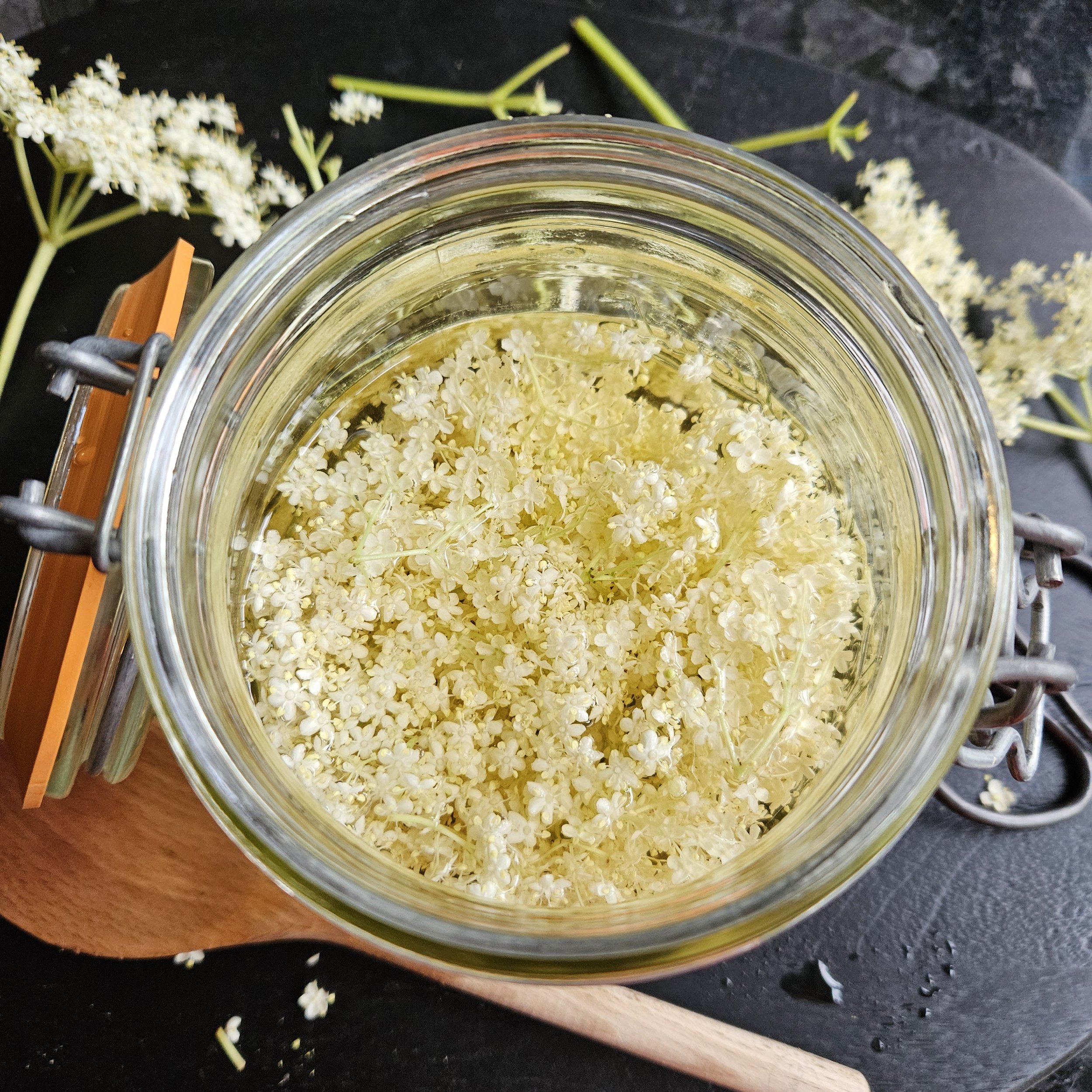
Elderflower-infused vinegar
One of my favourite ways to capture the brief elderflower season is with a simple elderflower-infused vinegar. The delicate floral notes pair so well with the gentle fruitiness of a good vinegar, creating a versatile ingredient for dressings, marinades and seasonal drinks.
THE SECRET INGREDIENT: Seasonality
One of the simplest ways to support wellbeing is to eat and use foods that are naturally in season where possible. Elderflowers bloom for only a few short weeks each year, making this recipe a reminder to slow down and connect with nature’s rhythm.
Serves: many
Prep and cook time: 40 minutes plus however far you have to walk to collect the elderflower!
Ingredients
500ml vinegar (white wine or apple cider vinegar - one with the mother is absolutely fine)
4-6 medium elderflower heads for a subtle floral flavour
8-10 elderflower heads for a stronger infusion
Equipment:
clean glass jar with lid
Fine sieve, muslin or cheesecloth
Clean glass bottle for storage
Method:
Pick elderflowers on a dry day when the blooms are fully open and fragrant. It’s a good idea to smell them to make sure you have the more newly opened ones.
Gently shake each flower head to remove any insects. Avoid washing them unless necessary, as this can dilute some of the pollen and aroma.
Trim away most of the thicker green stems, which can add bitterness.
Place the flower heads into a clean, sterilised glass jar.
Pour over the vinegar, ensuring all of the flowers are completely submerged.
Seal the jar and store it at room temperature, away from direct sunlight.
Leave to infuse for 7-14 days, giving the jar a gentle shake every few days.
Begin tasting after one week. Once the flavour is floral and fragrant to your liking, strain through a fine sieve or muslin.
Transfer to a clean sterilised bottle and store in a cool, dry place. The vinegar can keep for up to 1 year.
Notes:
Make sure you know what it is you are picking, or go with someone that has foraged for elderflower before.
Pick in an area that’s not too close to a road to avoid pollution. The flowers are usually too high to be concerned about dog walkers, but you get the drift on that!
Pick early morning on a dry, warm day (preferably sunny but we are in the UK!).
To sterilise the jar I find the easiest way is to place a washed, undried jar on a baking tray upside down and bake for 15 minutes at 180C. Then remove and leave to cool before use.
The flowers must stay submerged. It can help to put a disc of baking parchment on top. I usually blanch with some boiling water before use to make sure it is sterilised too.
You don't need to completely fill the jar with vinegar; just make sure the flowers are covered.
Cloudiness is normal if using raw, live vinegar - it may become a little more cloudier or develop additional "mother" during the infusion.
Don't leave it too long. Two weeks is usually plenty. Extended infusions can sometimes develop a slightly bitter note from the plant material.
Use your nose and taste as you go. Elderflower varies from year to year, so let your sense of smell and your palate guide the timing.
How to use:
Whisk into salad dressings.
Add a splash to sparkling water for a refreshing summer drink, or a G&T if that’s your thing!
Stir into marinades for chicken, fish or vegetables.
Drizzle over cucumber, fennel or leafy green salads.
The result is a beautifully aromatic vinegar that captures a little of early summer in a bottle. It’s a lovely way to make the most of this short-lived seasonal flower.